
Middle Grade Ninja: GUEST POST: “Objects with Secrets, Settings that Excite, Cultures that Expand” by Donald Willerton
I was in an antique store and found an old camel-backed trunk. It was a well-made trunk and in good condition, but it was locked. I could not get it open. I asked the owner of the store if he had a key and he said no. I asked if he had ever opened the trunk and he said no. Did he know what was inside? No.
I almost bought the trunk. Not because I needed a trunk or wanted a trunk, but because it was locked. That missing key spoke of mystery, intrigue, and a barrier between what I knew and what I wanted to know.
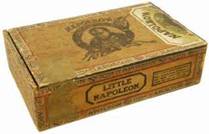
I was helping remodel an old Victorian house once, repairing a ceiling that required me to cut away some of the original plaster. Having opened a medium-sized hole, I could see along the floor joists of the room above. In between two of those joists, using my flashlight, I found a cigar box. Now, I knew that in the late 1890s, the third floor room above me had been the poker room where the Judge (the owner of the house) had held his Friday night poker sessions with some other dignitaries in the town.
So, there’s a cigar box that’s been hidden for a hundred years or so. It made sense that it had gotten there through a loose floorboard that the Judge had probably hid under a rug. I was betting that he stored his winnings in that box; or maybe a matched set of Derringers; or even a title to land that he had won from the local lawyer.
I tore down half the ceiling getting to that cigar box.
It was empty.
That’s the power of curiosity (augmented with too much imagination).
I am also curious about empty or abandoned houses. If the doors are locked, I have to look in the windows.
If I’m in a house with an attic, I start looking for the stairway.
If I find a box that’s taped up, I have to look in it.
If I find a jar with a lid and the lid is not only screwed on, but has tape over it, I really want to know what’s in the jar.
If I was to find an abandoned, closed coffin (I haven’t found one, yet, but considering if I did), I would want to open it and look inside. Every fiber of my being would tell me not to mess with an abandoned, closed coffin, but I would still want to open it and look inside. I wouldn’t do damage or anything, but if it had a ziplock top, or was wrapped in bungy cords, or something easy to undo, I’d take a deep breath and look inside.
Okay, so my point here is that I am curious about things that pose mystery or intrigue or, in the broad sense, that hide from me something that I might want to know.
I am naturally curious and believe that lots of people are also naturally curious. I at least hope they are.
Which means that if you write a book and there’s an interesting object in it – a hidden cigar box, a treasure map with cryptic markings, a coded message in a bottle, an unmarked path leading through a deeply wooded forest, a locomotive that’s heard passing in the night but can’t be found the next day, someone who’s murdered in a room where all the windows and doors are locked from the inside, a cave or a tunnel or an empty sewer pipe (I have a problem with tight spaces, so I ain’t goin’ in there, but I will still be curious), an old man’s cane that contains a sword, a drawing that shows a strange creature, but whose description is half missing, a deserted island where you find footprints – then you have an advantage over me.
I will read your book just because I’m curious about that object or that situation and will want to find out the resolution of my curiosity.
Well, I shouldn’t be overly gracious – I’ll start your book because I’m curious. You need to hurry up and take advantage of my curiosity, though; I’m not waiting forever.
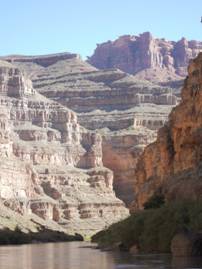
The same thing happens for me with settings that involve vast landscapes, but it’s not so much that I am naturally curious about landscapes as it is that I am naturally drawn in by unique landscapes and the inherent feelings that they bring out: a sense of awe and wonder, a realization of beauty, a longing to absorb something vast, the natural admiration of those who venture into those landscapes. If the setting of a book involves a place that kindles my imagination, I will naturally want to read the book. I’ll want to experience that setting and involve myself in it.
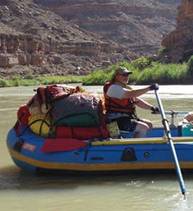
Adventuring in wilderness is like that. I’ve been on the tops of high mountains, in deep valleys, down rushing rivers, in and on oceans, on islands, deep in barren canyon lands, and have fished in remote lakes that I had to hike to – places that made me feel alone and solitary, places that made me feel isolated and vulnerable and at risk. There’s intrigue in being alone and being at risk, and I like intrigue. It means that I’m about to learn something that I didn’t know. Or maybe learn that I want something that I didn’t know I wanted.
Being in wilderness places, or being read into wilderness places that readers have likely never been, brings imagination and expectation and mental experimentalism (stick with me, here). If the place brings out those dimensions of emotion – the awe, the wonder, the feeling-of-being-overwhelmed, then something happens inside that reader that’s even more impressive – delight in the surroundings, joy in feeling treated to something special, humility at something so big.
A writer who draws a reader into a setting that elicits those emotions has a built-in advantage in dealing with the reader.
Let me go back to mental experimentalism. A different word is dreams. You wouldn’t guess it, but I was right behind Jack London when he was trying to get that fire going. I was in the sled behind those hard-charging dogs and felt the sharp edge of life in the bitter cold. I pondered the three-pipe problem with Holmes, and I sat in the chair next to the fire trying to figure out who the murderer was on the island that held only ten of us.
I loved what I read so much that I dreamed of being there.
That’s the power of objects that entice, the power of settings, the power of good writing, and the power of stories that are, if nothing else, interesting.
Let me throw in another: the power of an unfamiliar culture. That’s a harder thing to quantify with regard to giving a writer an advantage, but if expressed in terms of identity, it gets more manageable.
Everyone has a sense of place. Where we grew up is typically what we mean, though adoptions also work. We grow up seeing a certain landscape, dealing with certain types of people who behave in certain ways. We are schooled in certain values with expectations that reflect those values. History also usually plays a part: we are told about our ancestors, about our village, about belonging not to just our local environment, but about being invested with a lineage that makes us part of them.
That sense of place is our culture. It is our identity – it is who we are.
Now, if that is our culture, then understanding unfamiliar cultures includes understanding their place, their ancestors, their values, etc. That’s hard to do, but if a story is told that reflects that culture – that describes the place, people, times, values, etc. – then the reader is drawn naturally into that different culture without suffering under a command that they should do because “you’ll learn something”.
Again, the writer can gain advantage by portraying a culture in such a way that the reader naturally gravitates to internalizing and comparing that culture to their own. They see an identity that is not theirs, but that cultural divide becomes interesting in its own right. You might say that the reader is allowed to be naturally curious about different cultures without having it forced on them.
I’m a sucker for cooking shows that take place in other countries and other cultures. I love to eat, but it is clear entertainment to watch people eat with their fingers. My kingdom for a napkin! Were these people raised in a barn? Well, not any more than I was, but their culture is a mix of things that are far beyond what little towns in north Texas typically had. And, who would have thought, they also eat goats and snakes and iguanas and bugs and all sorts of stuff that I never imagined on a menu, and they love it like crazy. Seeing them enlarges me and my acceptance of what they do. It’s interesting enough that I don’t even change channels during commercials.
Okay, I’m wandering a little, so let me get back to my point: If a writer uses interesting objects that have naturally secretive overtones, unique settings that reflect naturally emotional dimensions that brings out passion in the reader, and different cultures in opposition to our own that naturally produce interest, that writer gains a natural leverage in writing his story; it will draw in readers more easily, make the reader more ready to listen, and create an environment that the reader will be more naturally attuned to believe in.
Why do I think about things like this and why would I write a blog about them? Because I write books that use these elements and I need affirmation that my principles are good. My principles don’t ride roughshod over good plots, good characters, good pace, good grammar, etcetera, but I want my stories to be powerfully grounded because I want the effect of my stories to be powerfully won.
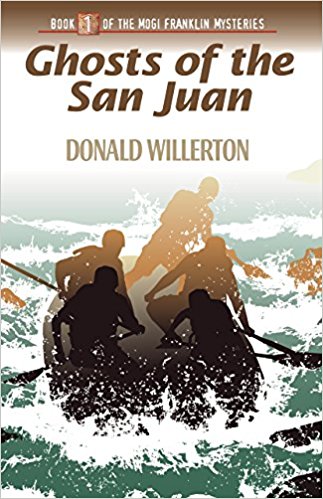
I write middle-grade mysteries that take place in different locations in the Southwest (Utah, New Mexico, Colorado, Arizona), involve my characters in adventures that happen in some pretty fantastic landscapes (remote desert canyons, wilderness rivers, high mountain peaks, hundred thousand acre cattle ranches, Georgia O’Keefe’s backyard), with mysteries based on secretive objects (a mysterious key, a trunk with a hidden bottom, stolen strongboxes of gold, a quilt with a secret code, a missing volcano), and involving cultures as diverse as the Navajo Nation, Native American Pueblos, Hispanics, Comanche Indians, Russians during the Cold War, and Californians.
I want to write stories that are not just mysteries, but are interesting stories, in interesting places, with interesting people. That approach gives me leverage in writing and I want as much leverage as possible in getting middle-grade boys and girlsto love reading my books.

Donald Willerton is the author of The Mogi Franklin Mysteries middle-grade series. After earning a degree in physics from Midwestern State University in Texas and a master’s in computer science and electrical engineering from the University of New Mexico, he worked for Los Alamos National Laboratory for almost three decades. During his career there, Willerton was a supercomputer programmer for a number of years and a manager after that for “way too long,” and also worked on information policy and cyber-security. Donald Willerton lives in Los Alamos, New Mexico.
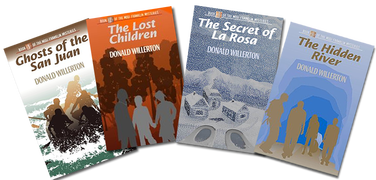
The Mogi Franklin Mystery series is a collection of middle-grade mysteries set in locations throughout the Southwest. Bold and clever in their design, young people will find themselves caught up in the country, the history, and the characters as Mogi battles the legends of the past to solve the mysteries of today.
Book 3: The Secret of La Rosa (ISBN: 978-1-938288-87-6)
Book 4: The Hidden River (ISBN: 978-1-938288-80-7)
Book 5: The Lake of Fire (ISBN: 978-1-938288-89-0)